

Some cars are not just machines; they are rolling art pieces that touch hearts. The Karmann Ghia, first introduced by Volkswagen in the 1950s, is one of those rare classics. I still remember the first time I saw a bright red Ghia parked on a quiet street. Its smooth curves, shiny chrome, and almost delicate design made it look like a sculpture rather than a car. That moment stayed with me, and it’s why I believe this little Volkswagen continues to charm people all over the world.
The Karmann Ghia is more than just a car. It represents style, affordability, and craftsmanship. Built in a time when Volkswagen was known for the Beetle, the Ghia showed that the company could also make something elegant and fashionable. In this article, we will take a friendly journey into its history, design, driving feel, collector value, and why it remains such an icon.
The Origins of the Karmann Ghia
The story of the Karmann Ghia starts in the 1950s when Volkswagen wanted to expand beyond the Beetle. They wanted a stylish car that could compete with the sporty coupes of Europe but still remain affordable for everyday people. For this project, they teamed up with two important names: Karmann, a respected German coachbuilder, and Ghia, an Italian design studio known for their sleek creations.
The result of this partnership was unveiled in 1955, and it stunned the car world. Imagine walking into a dealership back then and seeing this elegant, low-slung coupe with flowing lines. It looked like a luxury car but carried Volkswagen’s reputation for reliability. The Karmann Ghia was built on the Beetle’s platform, meaning it had the same air-cooled engine and dependable mechanicals. This combination of style and practicality made it a success.
When I first dug deeper into its history, I was fascinated by how it blended German engineering with Italian artistry. It wasn’t a car built for speed or power; instead, it was built for beauty and everyday joy. That’s what made it stand apart from other cars of its era.
Design: A Car That Looks Like Art
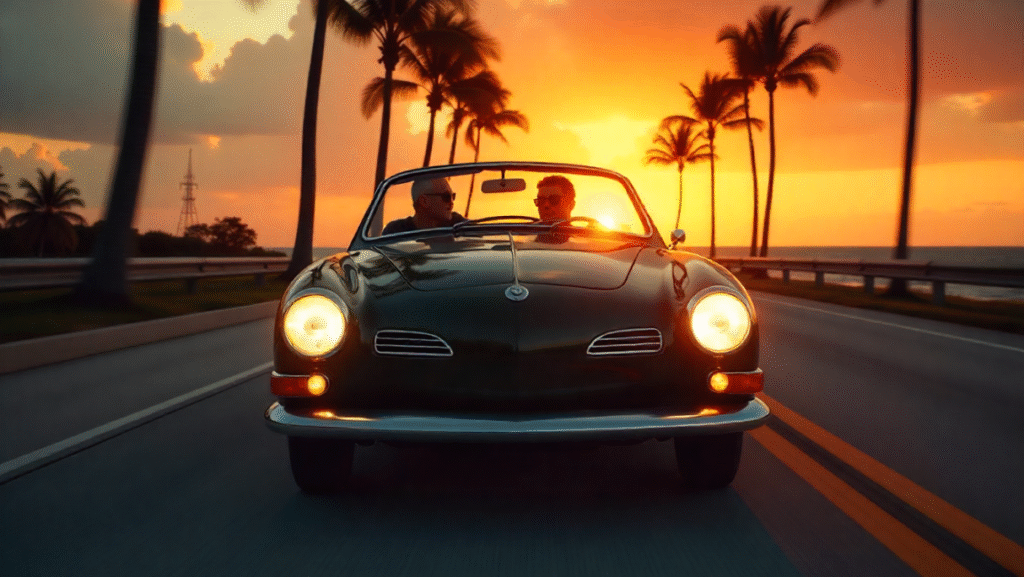
If you’ve ever seen a Karmann Ghia in person, you know it doesn’t just look like a car—it feels like rolling art. Its curves are soft and flowing, almost like waves. The front end has a friendly look, with small headlights and a delicate grille. The chrome bumpers add sparkle, while the side profile is smooth and timeless.
Italian designers at Ghia gave it that unique character. They took inspiration from high-end European sports cars but toned it down so it would feel approachable. Unlike many cars of the 1950s that had heavy fins and flashy details, the Ghia was subtle. That’s why it aged so well. Even today, a well-kept Ghia can turn heads at any car show.
When I first sat inside one, I was surprised by how simple the interior felt. The dashboard was clean, the seats were straightforward, but everything had a charm. It wasn’t about luxury—it was about a balance of elegance and simplicity. Driving it felt like stepping back in time, to an era when cars had personality.
Driving the Karmann Ghia: Simple Joy on Wheels
Driving a Karmann Ghia is not about speed or performance—it’s about the experience. The car shares its underpinnings with the Volkswagen Beetle, which means it has a small air-cooled engine in the back. Early models had just around 30 to 40 horsepower, so by modern standards, it’s slow. But that’s not the point.
When you drive a Ghia, you enjoy the road at your own pace. The engine hums softly, the steering feels light, and the car’s size makes it easy to handle. I once had the chance to ride in a friend’s 1969 Ghia convertible, and the feeling was unforgettable. The wind in my hair, the sound of the engine behind me, and the looks from passersby—it was pure joy.
The suspension, like the Beetle, is soft, making the ride comfortable for city driving. It’s not a sports car, but it makes every trip feel special. That’s why so many people who own them today say they don’t just drive a Ghia—they live with it, like a piece of history that keeps moving.
Variants: Coupe and Convertible
Over its production years, the Karmann Ghia came in two main versions: the coupe and the convertible. The coupe was the first model launched in 1955, and it quickly gained popularity for its stylish look. The convertible arrived in 1957, adding another layer of charm.
The coupe had a graceful roofline that made it elegant and timeless. The convertible, on the other hand, gave drivers a chance to enjoy open-air motoring with the same beauty. I personally think the convertible version is one of the most beautiful drop-top designs ever created. Seeing one with its top down on a sunny day is enough to make anyone smile.
Collectors today value both versions, though the convertible usually commands higher prices because fewer were made. Both carry the same spirit of elegance and simplicity, which is what makes the Karmann Ghia special.
Evolution Through the Years
The Karmann Ghia stayed in production from 1955 until 1974, and during that time it saw several updates. Early models had smaller engines and simpler designs, but as the years went on, Volkswagen made small changes to keep it fresh.
By the late 1960s, safety regulations meant bigger bumpers and stronger structures. The headlights were raised, and the car grew slightly larger. Some purists prefer the early models for their delicate lines, while others enjoy the later models for their improved practicality.
Throughout its life, though, the essence of the Karmann Ghia never changed. It remained a stylish, affordable coupe that offered something different from the average car. That consistency is part of why it has such a strong fan base even today.
Collectibility and Value Today
If you’re thinking of buying a classic car, the Karmann Ghia is one of the most rewarding choices. Unlike many classic sports cars, it’s still somewhat affordable. Of course, prices have gone up in recent years as more people recognize its beauty, but compared to high-end classics, it’s still within reach.
A well-restored coupe might cost anywhere from $20,000 to $40,000, while a clean convertible can go much higher. Rarer models or perfectly original examples can fetch even more at auctions. But beyond price, owning one is about passion.
I know a collector who has three Ghias, each from a different decade. He says he loves them because they never fail to spark conversations. Whether he takes them to shows or just drives them around town, people always stop to admire and ask questions. That’s the kind of charm you can’t put a price on.
Why the Karmann Ghia Still Captures Hearts
So why does the Karmann Ghia remain such an icon? The answer is simple: it combines beauty, simplicity, and history in one package. Unlike many cars that fade with time, the Ghia still feels fresh. Its design is timeless, its driving experience is fun, and its story connects German engineering with Italian artistry.
Every time I see one on the road, it makes me pause. It’s a reminder that cars can be more than just tools—they can be expressions of culture, design, and joy. For anyone looking to connect with automotive history, the Karmann Ghia offers that rare chance.
Conclusion:
The Karmann Ghia is not just another classic car. It’s a symbol of an era when style and simplicity could coexist. From its origins in the 1950s to its collector status today, it continues to inspire admiration. Whether you’re a car enthusiast, a collector, or just someone who loves beautiful things, the Ghia has something to offer.
Owning or even just riding in one feels like stepping into a piece of living art. And that’s why this little Volkswagen will always be remembered—not for its speed, but for its soul.
FAQs
Q1. What is a Karmann Ghia?
The Karmann Ghia is a classic car made by Volkswagen between 1955 and 1974. It was designed by the Italian company Ghia and built by the German coachbuilder Karmann. The car is famous for its smooth curves, stylish design, and reliable Volkswagen parts.
Q2. Is the Karmann Ghia a sports car?
Not really. The Karmann Ghia looks sporty, but it was never built for speed. It uses the same engine as the Volkswagen Beetle, which means it’s more about style and comfort than racing performance.
Q3. How much does a Karmann Ghia cost today?
The price depends on condition and model. A coupe in fair condition may start around $15,000, while a well-restored convertible can reach $40,000 or more. Rare models or fully original ones may sell for higher prices.
Q4. Is the Karmann Ghia a good investment?
Yes, many collectors see it as a smart investment. Its value has gone up over the years, and because it’s a beautiful and loved classic, demand is strong. Still, most owners buy it for passion rather than profit.
Q5. How hard is it to maintain a Karmann Ghia?
It’s easier than many other classic cars. Since it shares many parts with the Volkswagen Beetle, finding replacement parts is not too difficult. Basic mechanical repairs are simple, but bodywork and rust repair can be costly.